
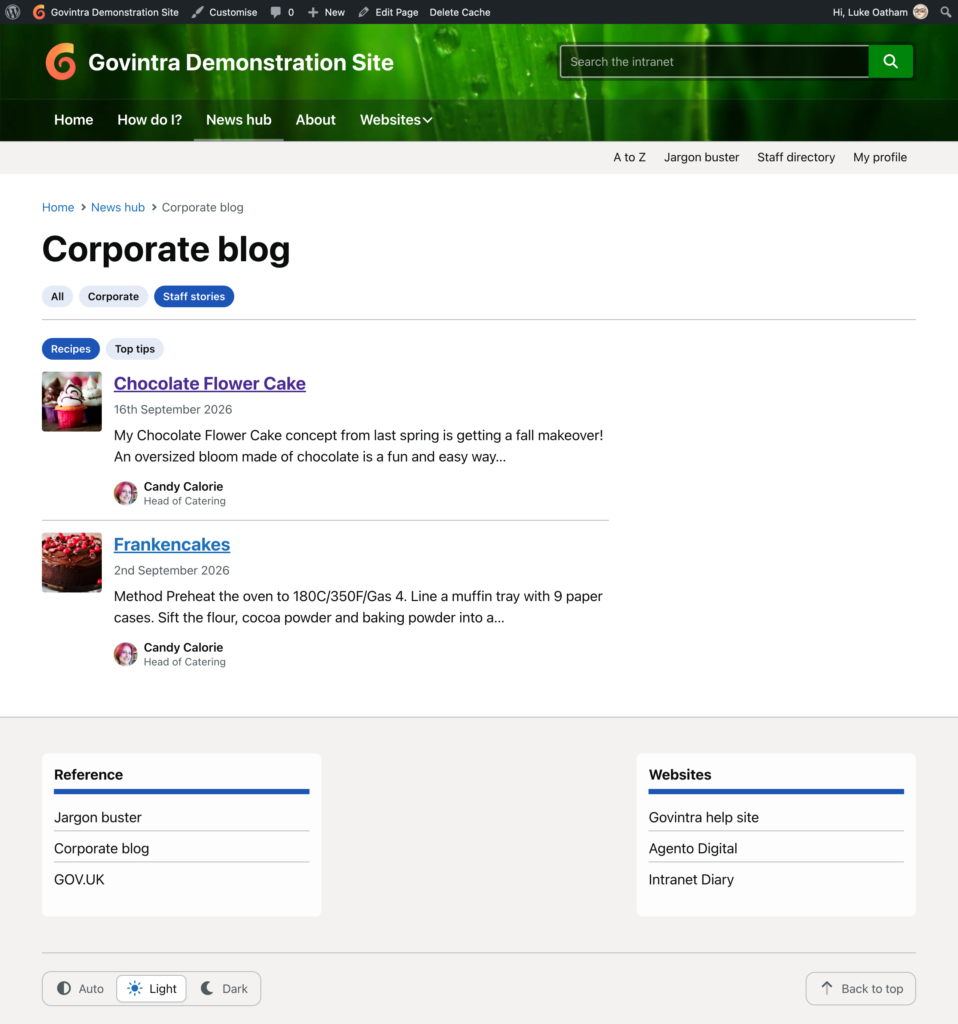
The Blog listing template turns a page into the blog landing page: every published blog post, newest first, with filters by blog category. It is normally applied to a page called Blog and linked from the main menu. To apply it, edit the page and choose Blog listing under Page Attributes, Template. Then go to Options, Modules, Blog and choose the page as the Blog page. The Blog module must be on. It works the same way as the News template, with blog categories in place of news types.
What the blog page shows
The page title, a row of blog category filters, the posts, page links, and the Blog Landing widget area in the right-hand column. The content typed into the page’s own editor is not shown on this template, so there is no need to write an introduction there. The number of posts per page comes from Settings, Reading, “Blog pages show at most”. When there are no posts the page says “No blog posts found.”
What each post card shows
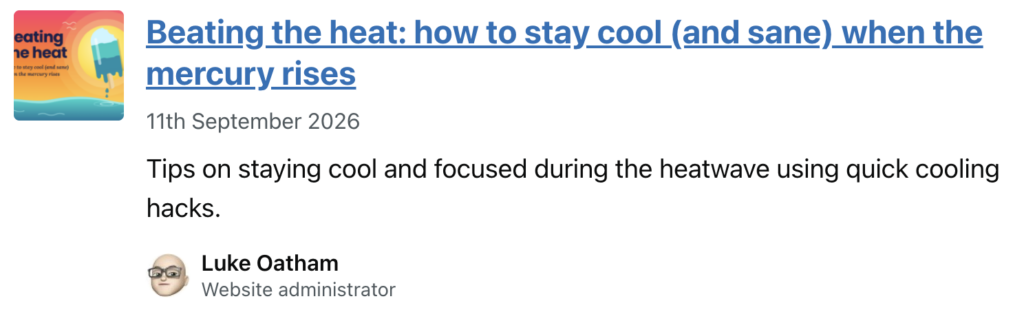
The featured image as a small thumbnail, the title, the publish date, the number of comments if the post has any, the first 25 words of the excerpt (or of the post if no excerpt has been written), and the author’s photo, name and job title from their staff profile. A post with the Link post format shows an external link icon after its title and opens the linked address instead of a post page. Selecting the image or title opens the post.
Blog category filters
The filter row shows All followed by every top-level blog category that has at least one published post. Selecting a category narrows the list to that category. When the chosen category has sub-categories, a second row of pills appears for them so people can narrow further, and it stays in place while a sub-category is selected. The filter is carried in the page address, so a filtered view can be linked to or bookmarked. Blog categories are managed under Blog posts, Blog categories; see Blog categories.
Blog category links on a post, and links to a category’s own archive, are sent to the blog page with that filter applied, as long as the Blog page option is set. The address /blog/ also works, but shows a plain archive without the filters or the widget area, so link people to the blog page itself.
Options that affect the blog page
Go to Options, Modules, then the Blog tab. The tab appears once Blog is switched on under Modules.
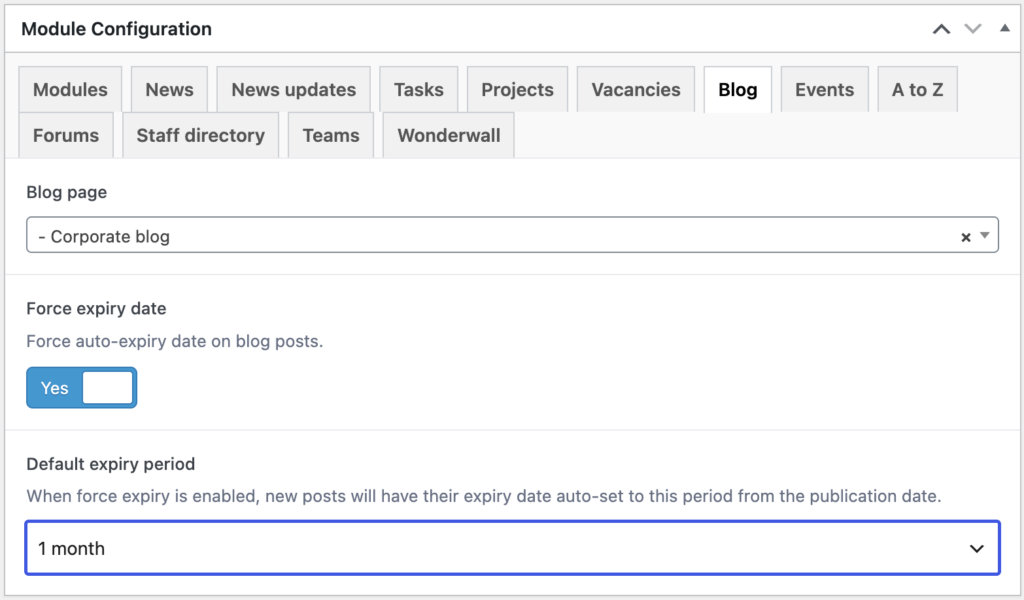
- Blog page: the page that uses this template. Used for breadcrumbs, menu highlighting, the “More blog posts” link on the Blog posts widget and the Comms hub, and blog category links.
- Force expiry date: off by default. When on, every blog post must have an auto-expiry date and cannot be saved without one.
- Default expiry period: shown when Force expiry date is on. None by default, or a period from 1 month to 5 years. New posts get an expiry date that far from their publish date, at 09:00, and revert to draft when it passes unless the author changes the expiry action to “Move to trash”.
Expired posts leave the page when their expiry date and time pass. See Module settings and options.
Widget areas
The Blog Landing widget area, under Appearance, Widgets, fills the right-hand column of the blog page. The separate Blog Sidebar area appears on each post’s own page, below the author card. To show posts on the homepage or in another sidebar, use the Blog posts widget, which can pin posts, filter by category and add a “More blog posts” link to this page. See Setup widgets on the homepage.
What the page draws on
Blog posts, added under Blog posts, Add blog post, with their blog categories, tags, featured images and excerpts. Only published posts appear, with drafts, scheduled and expired posts left out. A blog post is written like a news story, with an Auto expiry box in the right-hand column, a Format box for the Link, Video and Audio formats, and boxes for sidebar content, documents, related content and keywords. The author shown is the WordPress author of the post, which an editor can change in the Author box. See Feature a video in a news story and Allow comments on a news story or blog post.
Contributors can write draft posts, authors can publish their own, and editors and administrators can edit any post. Only administrators manage blog categories. See Roles and capabilities.
Post pages and author pages
Each post’s page shows the title, date, featured image (or the embedded video or audio), the content, and a sidebar starting with an author card: photo, name, job title, a Staff profile link and a Blog posts link. The Blog posts link opens the author’s page, which shows their photo and job title and every blog post they have written, newest first. News stories are not listed there.
Related
- Available templates: every page template in the theme.
- (Govintra) Blog posts widget
- Comms hub template: news, blog posts and news updates on one landing page.
- Setup navigation menus